

Welcome to Stirring the Aesthetic Pot, where beauty trends get questioned – and occasionally roasted.
I’m not a doctor. But I spend every day with two of the best in the business-and a team of master estheticians who live, breathe, and lose sleep over skin health. What I bring to the table is honest curiosity, lived experience, and a front-row seat to what actually works… let’s stir, shall we?
By now, you have seen the videos. A polished thirty-something describes her “preventative” facelift between clips about cold plunges, infrared saunas, peptide stacks, lymphatic drainage, and Pilates reformer sessions. The lighting is flawless, the tone is effortless, and the message is subtle but clear.
Everyone in the comments seems convinced this is simply what aging responsibly looks like now.
Somewhere along the way, aging well stopped meaning patience and started sounding a lot like scheduling intervention before anything had actually gone wrong.
That is the narrative online. Inside experienced facial plastic surgery practices, the reality is far less dramatic, and considerably less sponsored by wellness culture.
Most patients in their thirties are not candidates for a facelift. The face is still evolving at this stage of life. Fat compartments shift, skin quality changes, and underlying structure continues to mature. Surgically repositioning tissue before true descent occurs can create imbalance over time, with parts of the face aging on different timelines. And while modern techniques hide scars beautifully, they are still permanent.
Five second TikTok clips tend to skip that part.
The recent rise in this conversation is closely tied to rapid weight loss associated with GLP-1 medications and the emerging idea of metabolic aesthetics, the recognition that metabolism, weight fluctuation, inflammation, and body composition, influence how the face ages. Significant weight loss can reveal hollowing or laxity earlier than expected, leading younger patients to assume surgery is the logical next step.
In many cases, however, the issue is deflation rather than structural aging. Most patients in their thirties still retain strong skin elasticity, meaning that once weight stabilizes, the skin often rebounds on its own.
Time is not viral content. It remains a very effective treatment.
There are exceptions. Dr. Austin Adams with Rousso Adams Facial Plastics explains that patients who have lost very large amounts of weight, often over one hundred pounds, may develop genuine excess skin at a younger age. In select cases, surgical removal can be appropriate, similar in concept to body contouring after major weight loss. The decision is always individualized and based on anatomy, not age, and certainly not on what someone’s algorithm served them last week.
FROM THE CHAIR: THE WEIGHT LOSS REALITY CHECK
Dr. Austin Adams
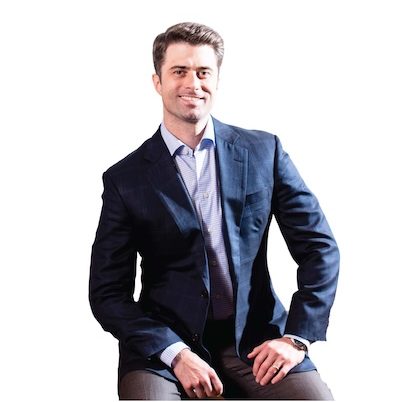 There is no magic number on the scale that determines when facial surgery becomes necessary. Surgeons are not measuring pounds lost, so much as they are evaluating skin behavior after weight stabilizes. In younger patients, elasticity often allows the face to recover naturally over time. When true excess skin remains despite stability, surgery may be appropriate. The deciding factor is anatomy, not urgency.
For most thirty year olds, the smarter approach is preservation. Neurotoxin treatments, conservative filler when indicated, and consistent medical grade skincare can address early changes without permanently altering facial structure.
The goal is support, not a premature reset button.
Surgeons will tell patients when a facelift is truly indicated, and equally when it is not.
As Dr. Adams often emphasizes, timing matters as much as technique. The right procedure performed too early is still the wrong decision.
The trend is not facelifts at 30. The trend is the conversation about them and the growing intersection of wellness culture, metabolic aesthetics, and surgical decision making. In a world obsessed with doing something early, the most powerful answer a surgeon can give is still the simplest one: not yet.