
Protein is having a moment.
It’s in the coffee. It’s in the cereal. It’s in the chips. There are protein waters, protein bars and enough protein powders to make choosing one feel like a major life decision.
But underneath all the marketing, there is a legitimate reason we’re talking about protein so much. It plays an important role in maintaining muscle, strength and overall health, and it becomes particularly worth paying attention to as we get older.
So, are you actually getting enough?
First, How Much Protein Do You Need?
The standard Recommended Dietary Allowance for healthy adults is **0.8 grams of protein per kilogram of body weight per day**. That’s about 0.36 grams per pound.
For a 150-pound adult, that works out to roughly 54 grams of protein per day. At 180 pounds, it’s around 65 grams.
But there’s an important distinction: the RDA is designed to meet the nutritional needs of nearly all healthy adults. It isn’t necessarily an individualized target for maximizing muscle or supporting a particular fitness goal.
Age and activity level matter, too.
Research on healthy older adults has suggested around **1.0 to 1.2 grams per kilogram per day**, with higher amounts sometimes recommended for people who exercise regularly. Your individual needs can vary based on age, activity, health and other factors, so there’s no single magic number that works for everybody.
Protein Isn’t Just for People Trying to Build Muscle
This is where protein’s gym-bro reputation has done it a bit of a disservice.
Yes, protein helps repair and build muscle after exercise. But maintaining muscle matters whether you’re trying to deadlift something impressive or simply want to stay strong and active as you get older.
Adults naturally lose muscle mass and strength with age. Getting adequate protein, particularly when paired with resistance exercise, is one piece of protecting against that decline.
For women, this can become especially relevant in midlife and after menopause, when maintaining muscle and bone health deserves more attention. For men, age-related muscle loss matters, too.
In other words, this isn’t just about looking stronger. It’s about staying stronger.
Are You Eating It All at Dinner?
Here’s where plenty of otherwise decent diets get a little lopsided.
Breakfast might be coffee and toast. Lunch is a salad with a little chicken. Then dinner arrives with the steak, fish or other major protein source.
You may technically get a reasonable amount of protein by the end of the day, but research suggests there may be benefits to spreading protein more evenly across meals, particularly as we age.
A useful goal for many adults is to make protein a real part of breakfast and lunch instead of asking dinner to do all the work.
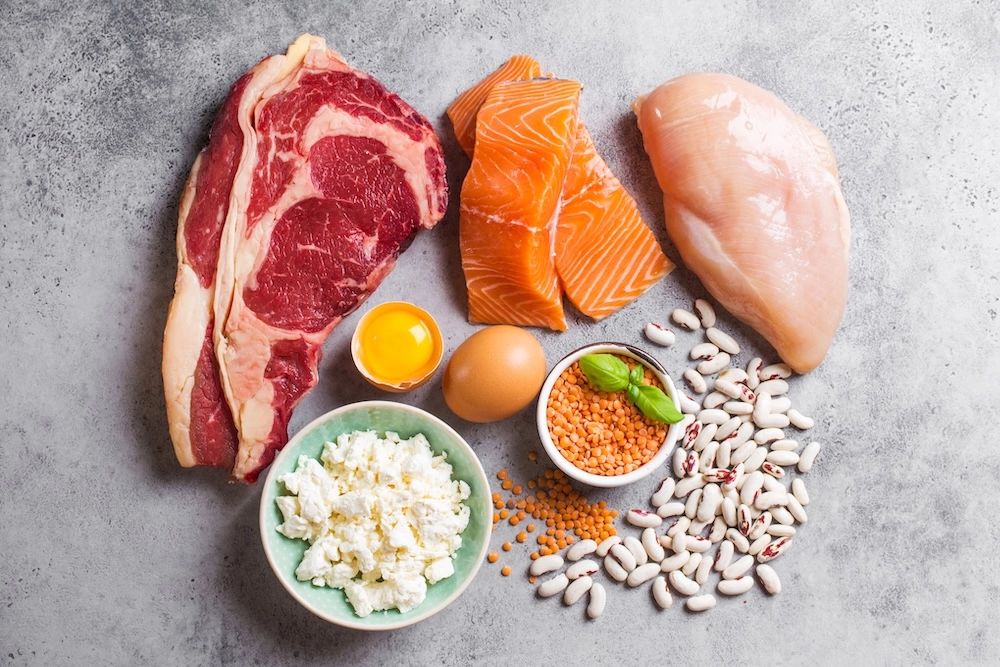
That could mean eggs or Greek yogurt at breakfast, chicken or salmon at lunch, cottage cheese as a snack, or adding beans, lentils, tofu and other plant-based sources throughout the day.
What Does 25 to 30 Grams Actually Look Like?
Protein numbers don’t mean much if you have no idea what they look like on a plate.
Depending on the exact food and serving size, roughly 25 to 30 grams of protein could look like:
• About 4 ounces of cooked chicken breast
• About 4 ounces of salmon
• A cup of Greek yogurt paired with nuts or another protein source
• Eggs combined with Greek yogurt or cottage cheese
• A bowl built around lentils, beans, tofu or another combination of plant proteins
• A protein shake that provides around 20 to 30 grams
You don’t have to hit an exact number every time you eat. The point is to start noticing whether there’s a meaningful protein source on the plate.
Do Men Need More Than Women?
Not simply because they’re men.
Protein recommendations are generally based on factors such as body weight, age and activity rather than sex alone. Because men often weigh more and may carry more lean mass, their total daily protein intake may end up being higher.
But an active 55-year-old woman may have a higher protein target than a sedentary 35-year-old man.
Context matters more than the label.
Do You Need Protein Powder?
No.
Protein powder is convenient. That’s really its superpower.
If you’re having trouble getting enough protein through meals, a shake can make it much easier. The same goes for busy mornings, after a workout or on days when lunch somehow becomes whatever you can find between meetings.
But protein powder isn’t inherently better than eggs, fish, chicken, dairy, beans, lentils, tofu or other whole-food protein sources.
If you’re already getting enough through food, you don’t earn extra wellness points for adding a scoop to everything you consume.
More Isn’t Automatically Better
Protein matters. That doesn’t mean every meal needs to contain 60 grams of it.
Your body still needs carbohydrates, healthy fats, fiber, vitamins, minerals and enough total calories to function well. A high-protein diet that pushes everything else off the plate isn’t automatically a healthy one.
And individual medical circumstances matter. People with certain kidney conditions or other health concerns may need different protein recommendations and should talk with their physician or a registered dietitian before significantly increasing their intake.
So, Are You Getting Enough?
You don’t necessarily need to download an app and start weighing chicken breasts tonight.
Start smaller.
Pay attention to what you normally eat for a day or two. Is there protein at breakfast? At lunch? Are you eating enough after exercise? Has your diet changed as you’ve gotten older, while your expectations for what your body should be able to do haven’t?
Protein doesn’t need to become your personality.
But it might deserve a little more attention than you’ve been giving it.
Want more Birmingham health, wellness, lifestyle and local stories delivered straight to your inbox? Sign up for the About Town email and stay connected to what’s happening around town.